

Keynotes
August-Wilhelm Scheer
Von strukturierter Prozess- und Datenmodellierung zu Agentic AI Architekturen
Abstract
Im ersten Teil des Vortrages wird die Entwicklung der Modellierung von den ersten Ideen des Verfassers als Projektmitarbeiter eines komplexen Entwicklungsprojektes über seine Erfahrungen als Doktorand und Habilitand bis zu seiner modellbasierten Lehre der Wirtschaftsinformatik vorgestellt. Dabei wird auch auf die Zusammenarbeit mit dem Softwareunternehmen SAP AG und Erfahrungen mit der Entwicklung des ARIS-Systems und seiner internationalen Verbreitung eingegangen.
Im zweiten Teil werden aktuelle Erweiterungen der Modellierung für digitale Zwillinge bei den industriellen Anwendungen, Produktentwicklung, Fabrikplanung und Fertigungssteuerung aufgezeigt. Hierbei wird insbesondere auf die Bedeutung der Datenmodellierung eingegangen, da Daten allgemein als ein besonderer Schatz der deutschen Industrieunternehmen angesehen werden.
Im dritten Teil wird die Bedeutung der Modellierung für Agentic AI diskutiert. Es wird an einem Beispiel gezeigt, dass ein Prozessmodell für eine komplexe Bearbeitung erforderlich ist, um den Ablauf eines Multiagentensystems zu steuern. Da der Ablauf eines Agenten-Prozesses stochastisch ist, besitzt die nachfolgende Dokumentation eines realen Ablaufes im Sinne eines Process Minings eine besondere Bedeutung. Daraus ergeben sich neue Forschungsansätze.
Short Bio
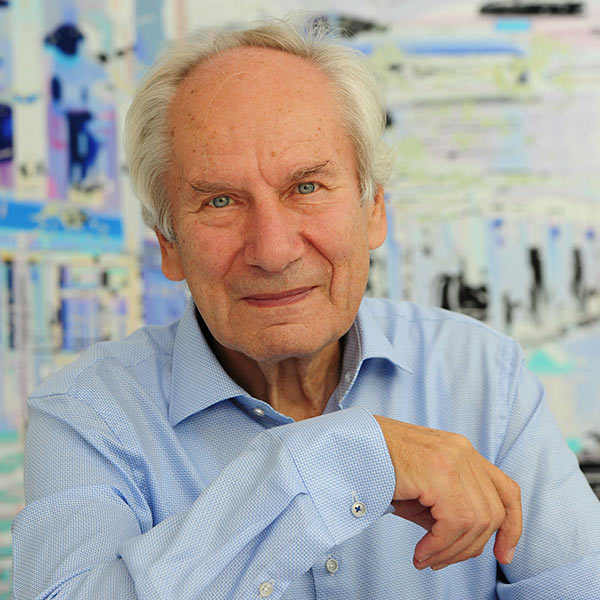
Prof. Dr. Dr. h.c. mult. August-Wilhelm Scheer ist einer der prägenden Wissenschaftler und Unternehmer der deutschen Wirtschaftsinformatik. Seine Bücher gehören zu den Standardwerken des Geschäftsprozessmanagements. Er ist Entwickler der Enterprise Architecture ARIS, die seit vielen Jahren in Groß- und mittelständischen Unternehmen international eingesetzt wird. Er ist Gründer der August-Wilhelm Scheer Holding als Zusammenschluss erfolgreicher Software- und Beratungsunternehmen. Zu den Unternehmen zählen das Beratungshaus Scheer IDS, das Softwareunternehmen Scheer PAS und die Scheer IMC für digitale Lerntechnologien. Zur Förderung des anwendungsorientierten Forschungstransfers hat er im Jahr 2014 das gemeinnützige August-Wilhelm Scheer Institut für digitale Produkte und Prozesse gGmbH gegründet.
Leen Lambers
From software engineering pearls to modeling and back again
Abstract
In his book about ‚Software Development Pearls‘ (2021), Karl Wiegers offers valuable insights into various topics, including requirements, design, project management, teamwork, quality, and process improvement in software development and management. These lessons emerged from painful experiences in software engineering practice. In this talk, we will examine a selection of ‘Software Development Pearls’, exploring their genesis and the role of modelling in this process. We will then consider which new or improved modelling techniques are needed to cultivate further 'Software Development Pearls' and support current trends in software development, such as the integration of AI. In particular, we will present our ongoing research into current use cases in healthcare, intelligent manufacturing, and support for large-scale experiments in particle physics. The talk will also focus on graph-based techniques, which are particularly useful for modelling complex requirements, code artefacts, system architectures, or computing states.
Short Bio
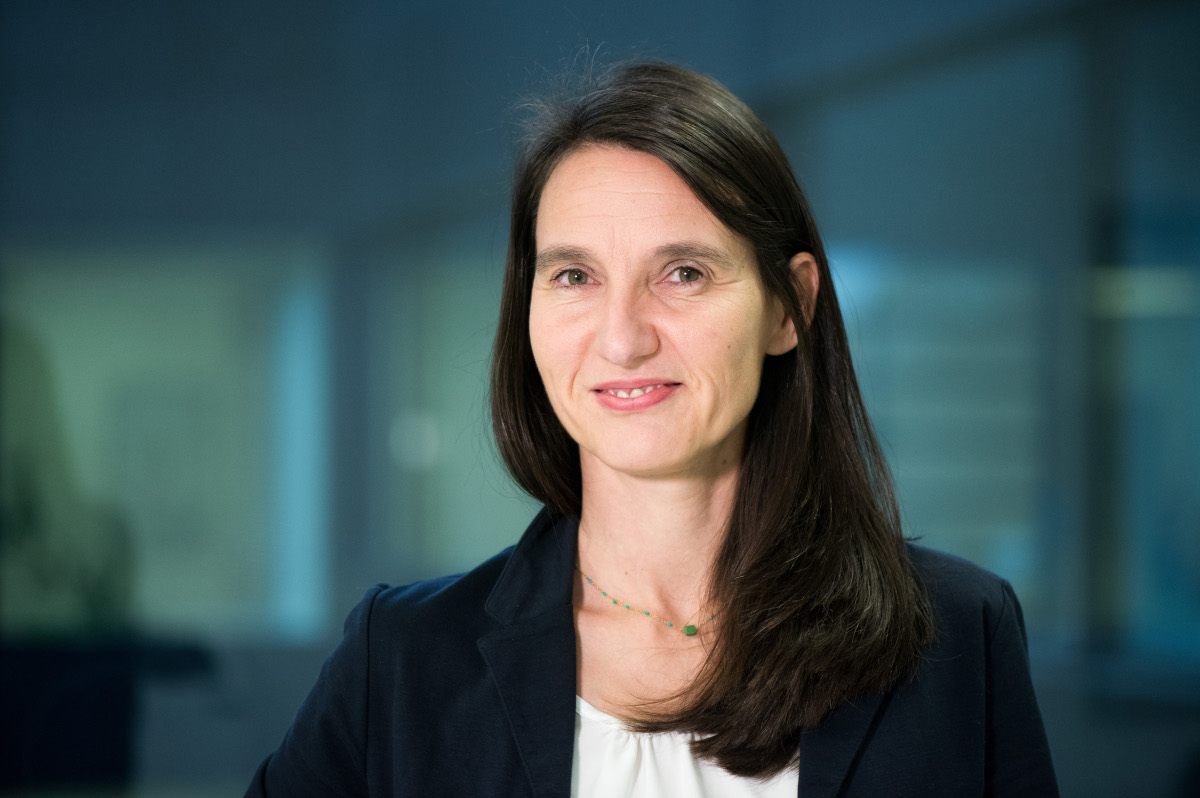
Leen Lambers has been head of the Practical Computer Science/Software Systems Engineering department at Brandenburg University of Technology Cottbus-Senftenberg since October 2021. Her teaching and research focus on software quality and agile model-based quality assurance. Current areas of application range from healthcare and intelligent manufacturing to supporting large-scale experiments in particle physics. In the field of basic research, she deals with formal methods (especially graph transformations) that enable model-based quality assurance in software engineering. Since June 2025, she has been a member of the editorial board of the International Journal on Software and Systems Modeling. Together with Michael Pradel (University of Stuttgart), she is currently Program Chair for the Software Engineering Conference in Bern at the end of February 2026 and, together with Sébastien Mosser (McMaster University, Canada), for the second edition of the International School on Foundations and Advances of Model-Based Engineering (FAME) in the run-up to the next MODELS in Málaga in October 2026.
Lena Kästner
Beyond the Hype: Why Explainable AI Isn't a Silver Bullet
Abstract
Calls for making AI safe, trustworthy and fair are made by scholars, legal institutions, NGOs, and customer protection services alike. However, how to best satisfy these desiderata remains the subject of academic, political, and legal debates. Over the past decade or so, research on explainable AI (XAI) has taken center stage in these debates. While there has been a veritable XAI-hype, and XAI clearly can contribute to desiderata satisfaction in some cases, it must be acknowledged that XAI is not a silver bullet. There are a number of reasons why XAI may fail to successfully lead to desiderata satisfaction, and there are a number of issues XAI cannot successfully address. This talk offers a systematic analysis of XAI shortcomings from an interdisciplinary perspective incorporating contributions from philosophy, law, computer science and psychology. It sketches possible ways forward by proposing strategies that might be needed in addition to XAI research. Eventually, a clever combination of different methods and strategies will hopefully yield satisfaction of important societal desiderata.
Short Bio
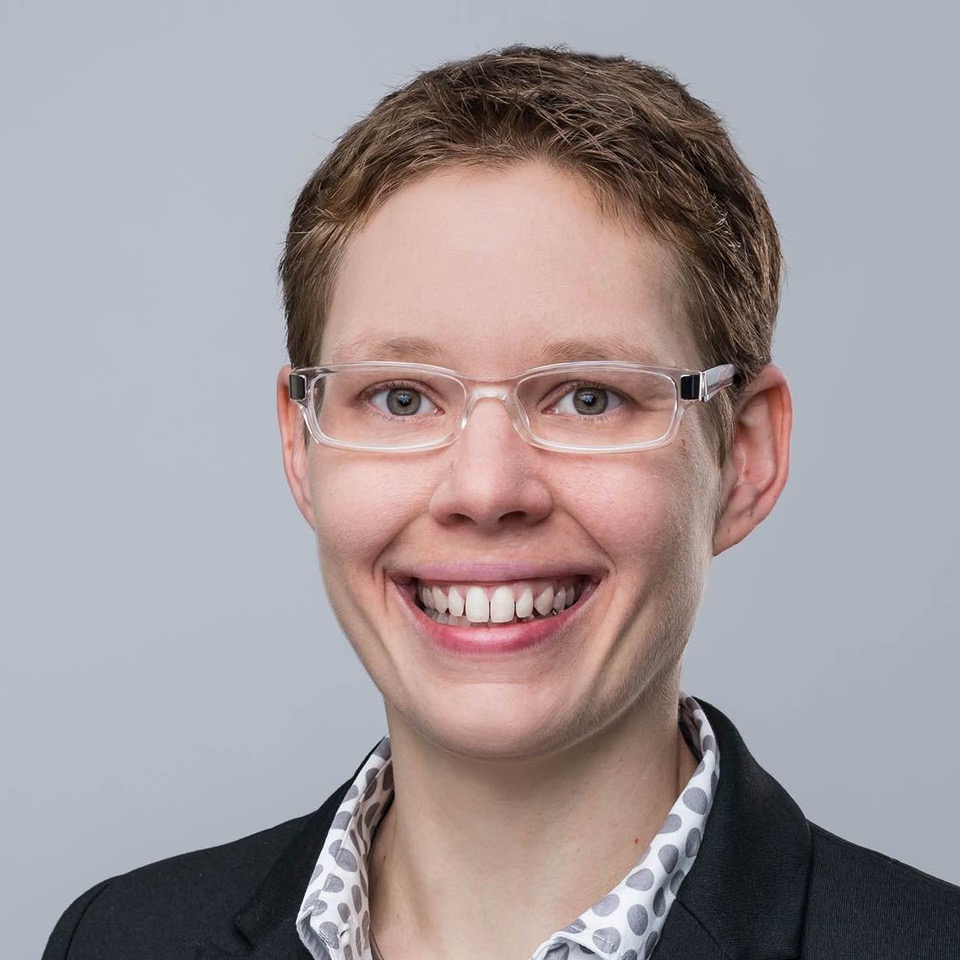
Lena Kästner is professor for philosophy, computer science and AI at the University of Bayreuth. She has a background in Cognitive Science and Cognitive Neuroscience and received her PhD in philosophy from Ruhr-University Bochum. Prof. Kästner’s research focuses on explanations, intelligence, and causation. She headed the “Explainable Intelligent Systems (EIS)” and is currently head-PI of the project “For the Greater Good? Deepfakes in Criminal Prosecution (FoGG)”. She is also vice president of the German Society for Philosophy of Science (GWP), vice-director of Bayreuth’s “Research Center for AI in Science and Society (RAIS2), and coordinator of the interdisciplinary Master’s program “Philosophy & Computer Science” in Bayreuth.