

Programme
Montag
→Panel Disussion (Chair: Hans-Georg Fill)
Donnerstag
Panel Disussion (Chair: Agnes Koschmider)
Hauptprogramm
Mod 1: Challenges and Opportunities of Modeling (Dienstag 11:00-12:30, Chair: Peter Fettke)
- Status quo and future prospects in data, process, and software modeling. Judith Michael, Dominik Bork, Manuel Wimmer and Heinrich C. Mayr
- Enhancing Test Coverage Evaluation for Attack Simulations. Daniel Nils Braun, Thomas Ricardo Pathe and Simon Hacks
- Diskrete Modellierung eines ökonomischen Marktes - eine Fallstudie am Beispiel des Orderbuchs. Peter Fettke and Wolfgang Reisig
- SAP Process Mining Challenges: No magic wand in sight! Niklas-Kim Laerum and Markus Nüttgens
Mod 2: Formal and Practical Foundations of Modeling (Dienstag 14:00-15:30, Chair: Judith Michael)
- Dynamic Symbolic Execution of Component-and-Connector Models for Semantic Differencing. Johanna Grahl, Bernhard Rumpe, Max Stachon and Sebastian Stüber
- AnyText: Incremental, left-recursive Parsing and Pretty-Printing from a single Grammar Definition with first-class LSP support. Georg Hinkel
- Generating Language Servers for MontiCore-based DSLs. Joel Charles, Alexander Hellwig and Bernhard Rumpe
- A Model Cleansing Pipeline for Model-Driven Engineering: Mitigating the Garbage In, Garbage Out Problem for Open Model Repositories. Djelic Andjela, Syed Juned Ali, Charlotte Verbruggen, Julia Neidhardt and Dominik Bork
Mod 3: Process Modeling and Mining (Mittwoch 14:00-15:30, Chair: Christian Imenkamp)
- Model-based Specification and Capability Evaluation of Robot Kinematic Requirements. Jeshwitha Jesus Raja and Marian Daun
- MANTA: Materializing Views on Event Data for Context Exploration in Process Analysis. Maike Basmer, Hannes Ueck, Dirk Fahland and Matthias Weidlich
- Control-flow Reconstruction Attacks on Business Process Models. Henrik Kirchmann, Stephan Fahrenkrog-Petersen, Felix Mannhardt and Matthias Weidlich
- Beyond assumptions: A reference architecture to enable unsupervised process discovery from video data. Niklas Wördehoff, Andreas Egger, Wolfgang Kratsch, Fabian König and Maximilian Röglinger
Panel: Humanity’s Last Modeling Exam (Dienstag 16:00-17:30, Chair: Hans-Georg Fill)
Panelists:
- Peter Fettke
- Marina Tropmann-Frick
- Maria Leitner
- Stephan Fahrenkrog-Petersen
Mod 4: Digital Shadows and Twins (Donnerstag 11:00-12:45, Chair: Jens Gulden)
- About Opportunities and Challenges in Model-Driven Engineering for Digital Twins. Judith Michael, Loek Cleophas, Steffen Zschaler, Tony Clark, Benoit Combemale, Thomas Godfrey, Djamel Eddine Khelladi, Vinay Kulkarni, Daniel Lehner, Bernhard Rumpe, Manuel Wimmer, Andreas Wortmann, Shaukat Ali, Balbir Barn, Ion Barosan, Nelly Bencomo, Francis Bordeleau, Georg Grossmann, Gabor Karsai, Oliver Kopp, Bernhard Mitschang, Paula Muñoz Ariza, Alfonso Pierantonio, Fiona A. C. Polack, Matthias Riebisch, Holger Schlingloff, Markus Stumptner, Antonio Vallecillo, Mark van den Brand and Hans Vangheluwe
- Anwendung von Digitalen Schatten auf verschiedenen Ebenen der Automatisierungspyramide am Beispiel Spritzguss. Malte Heithoff, Judith Michael, Patrick Sapel, Thilo Köbel, Bernhard Rumpe and Christian Hopmann
- AVOCADO: The Streaming Process Mining Challenge. Christian Imenkamp, Andrea Maldonado, Hendrik Reiter, Martin Werner, Wilhelm Hasselbring, Agnes Koschmider and Andrea Burattin
- Exploring Modelling Languages for Conversation-Based Digital Therapeutics. Carola Martin
Doktorand:innen-Symposium
DS 1: PhD Proposals (Montag 14:00-15:30)
- Morten Harter: Modular Model-Based Threat Analysis and Risk Assessment
- Niklas-Kim Laerum: Referenzmodellbasiertes Financial Process Mining
- Tobias Pfaller: Modelling, Executing and Evaluating Cyber Exervises through Business Process Utilisation
DS 2: Ask Us Anything: Was Sie schon immer über den Wissenschaftsbetrieb fragen wollten (Montag 16:00-17:30)
Dieses Panel wirft einen Blick hinter die Kulissen des Wissenschaftsalltags – jenseits von Veröffentlichungen und Experimenten. Diskutiert werden persönliche Erfahrungen, Aufgaben, Herausforderungen und Karrierewege in Hochschule und Industrie, die für Promovierende und Postdocs besonders relevant sind. Diese Session ist offen für alle Teilnehmenden der Tagung.
Industry Forum
Industry Forum 1
- Gregor Engels: From Digital Twins of Real Entities to Composed Digital Twins of Smart Ecosystem
Industry Forum 2
- Maria Leitner: Strategies for Mining Processes in Manufacturing Execution Systems Data
- Christian Bennoit: Hyperautomated Companies: The Answer’s in Process Modeling
- Expert Discussion
Abendveranstaltungen
Workshop-Empfang (Montag, 09.03.2026)
Am 09. März 2026 findet der Empfang im RW (Rechts- und Wirtschaftswissenschaften)-Gebäude der Universität Bayreuth statt. 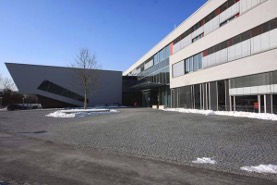
(Quelle: Webseite Uni Bayreuth)
Konferenz-Empfang (Dienstag, 10.03.2026)
Am 10. März 2026 findet der Konferenzempfang im Forschungszentrum Afrika statt. Das Gebäude befindet sich zentral auf dem Campus-Gelände und ist etwa 5 Gehminuten vom Konferenzgebäude der Modellierung 2026 zu erreichen.
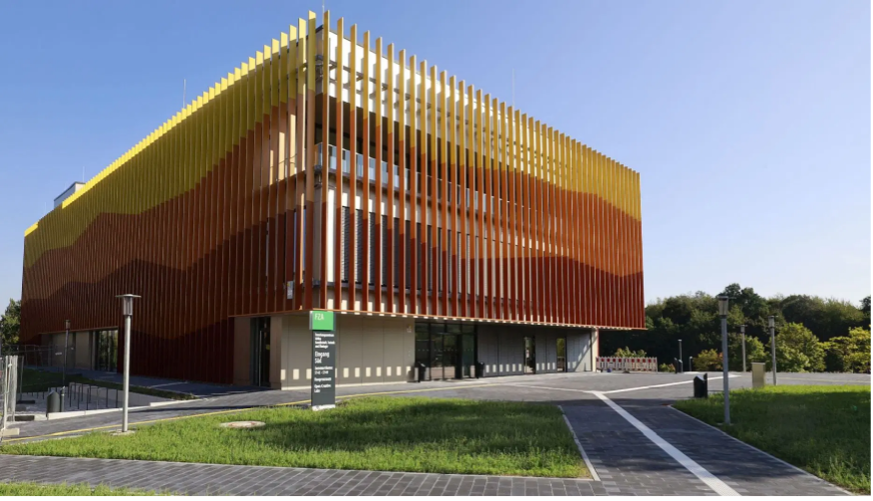
(Quelle: Webseite Uni Bayreuth)
Konferenz-Dinner (Mittwoch, 11.03.2026, 18:30 Uhr)
Das Konferenz-Dinner findet am 11. März 2026 im Restaurant „Liebesbier“ statt.
Adresse: Andreas-Maisel-Weg 1, 95445 Bayreuth
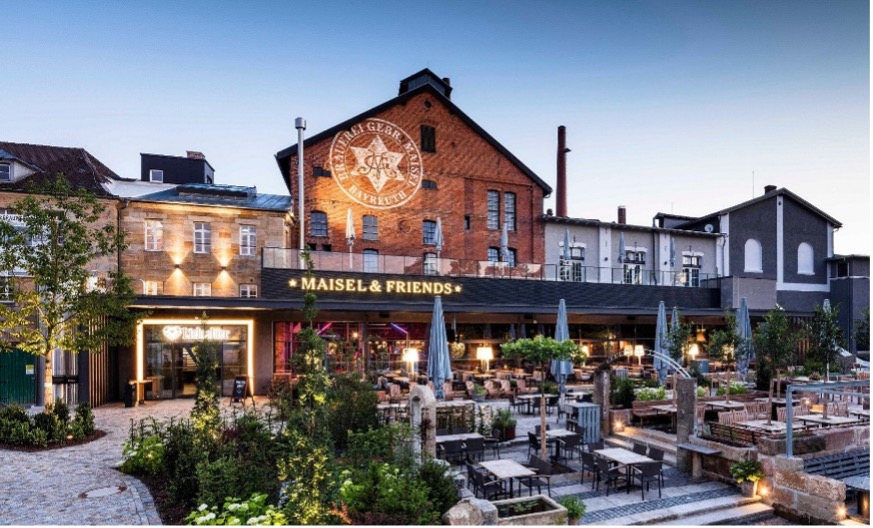
(Quelle: Webseite Liebesbier)