

Keynotes
August-Wilhelm Scheer
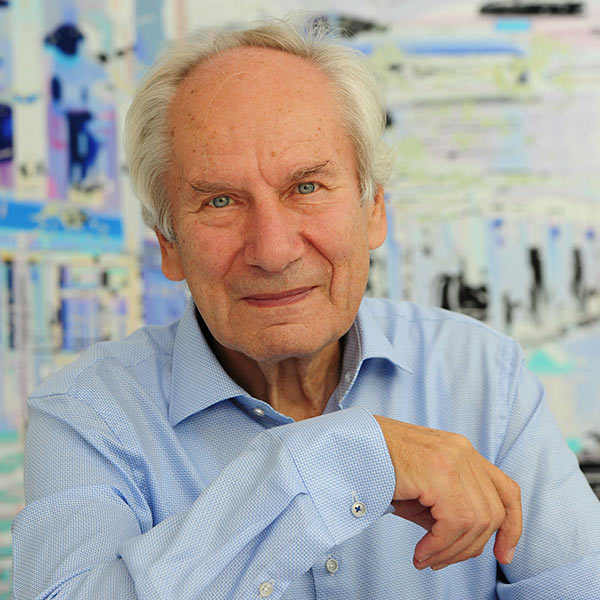
From structured process and data modeling to agentic AI architectures
Abstract
The first part of the keynote presents the development of business process modeling from the author's initial ideas as a project team member in a complex development project, through his experiences as a doctoral student and postdoctoral researcher, to his model-based teaching of business informatics. It also discusses his collaboration with the software company SAP AG and his experiences with the development of the ARIS system and its international distribution.
The second part highlights current extensions of modeling for digital twins in industrial applications, product development, factory planning, and production control. In particular, it addresses the importance of data modeling, as data is generally considered a special value for German industrial companies.
The third part discusses the importance of modeling for agentic AI. An example is used to show that a business process model for complex processing is necessary to control the flow of a multi-agent system. Since the flow of an agent process is stochastic, the subsequent documentation of a real flow in the sense of process mining is of particular importance. This gives rise to new research approaches.
Short Bio
Prof. Dr. Dr. h.c. mult. August-Wilhelm Scheer is one of the most influential scientists and entrepreneurs in German business informatics. His books are considered standard works on business process management. He is the developer of the ARIS Enterprise Architecture, which has been used internationally in large and medium-sized companies for many years. He is the founder of August-Wilhelm Scheer Holding, an association of successful software and consulting companies. These companies include the consulting firm Scheer IDS, the software company Scheer PAS, and Scheer IMC for digital learning technologies. To promote application-oriented research transfer, he founded the non-profit August-Wilhelm Scheer Institute for Digital Products and Processes gGmbH in 2014.
Leen Lambers
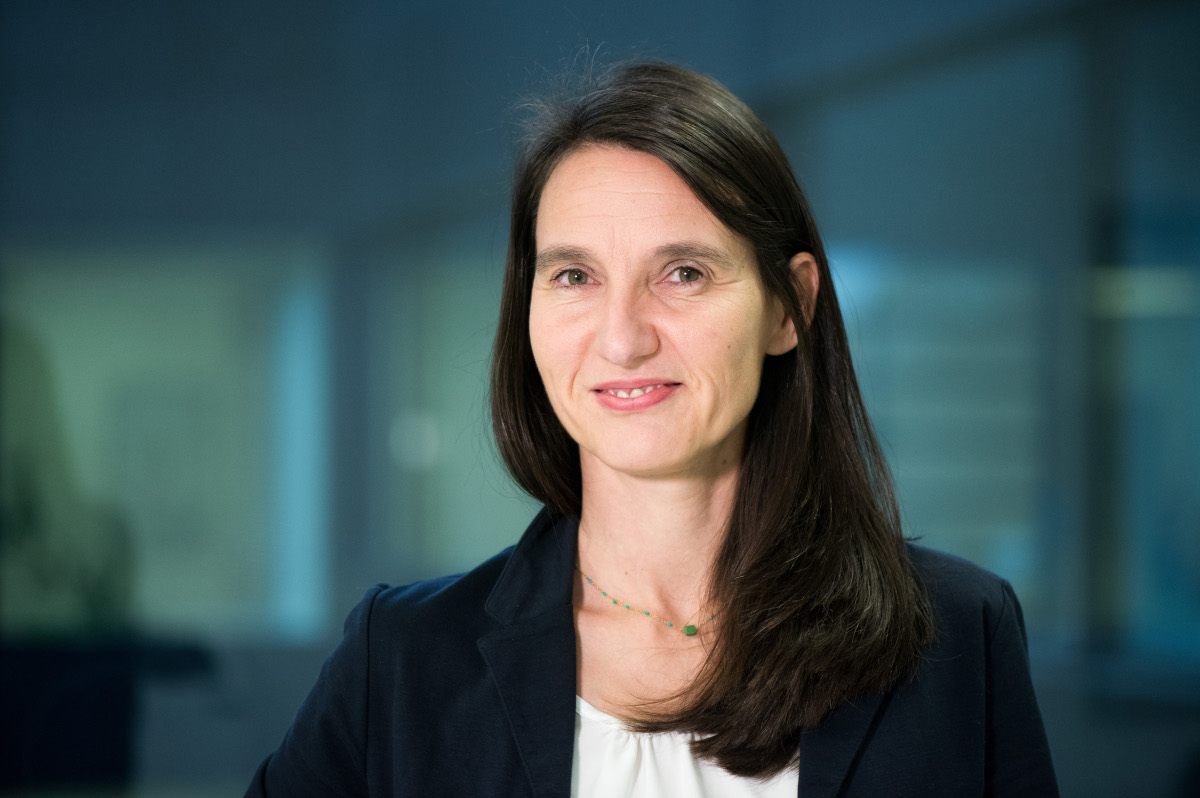
From software engineering pearls to modeling and back again
Abstract
In his book about ‚Software Development Pearls‘ (2021), Karl Wiegers offers valuable insights into various topics, including requirements, design, project management, teamwork, quality, and process improvement in software development and management. These lessons emerged from painful experiences in software engineering practice. In this talk, we will examine a selection of ‘Software Development Pearls’, exploring their genesis and the role of modelling in this process. We will then consider which new or improved modelling techniques are needed to cultivate further 'Software Development Pearls' and support current trends in software development, such as the integration of AI. In particular, we will present our ongoing research into current use cases in healthcare, intelligent manufacturing, and support for large-scale experiments in particle physics. The talk will also focus on graph-based techniques, which are particularly useful for modelling complex requirements, code artefacts, system architectures, or computing states.
Short Bio
Leen Lambers has been head of the Practical Computer Science/Software Systems Engineering department at Brandenburg University of Technology Cottbus-Senftenberg since October 2021. Her teaching and research focus on software quality and agile model-based quality assurance. Current areas of application range from healthcare and intelligent manufacturing to supporting large-scale experiments in particle physics. In the field of basic research, she deals with formal methods (especially graph transformations) that enable model-based quality assurance in software engineering. Since June 2025, she has been a member of the editorial board of the International Journal on Software and Systems Modeling. Together with Michael Pradel (University of Stuttgart), she is currently Program Chair for the Software Engineering Conference in Bern at the end of February 2026 and, together with Sébastien Mosser (McMaster University, Canada), for the second edition of the International School on Foundations and Advances of Model-Based Engineering (FAME) in the run-up to the next MODELS in Málaga in October 2026.
Lena Kästner
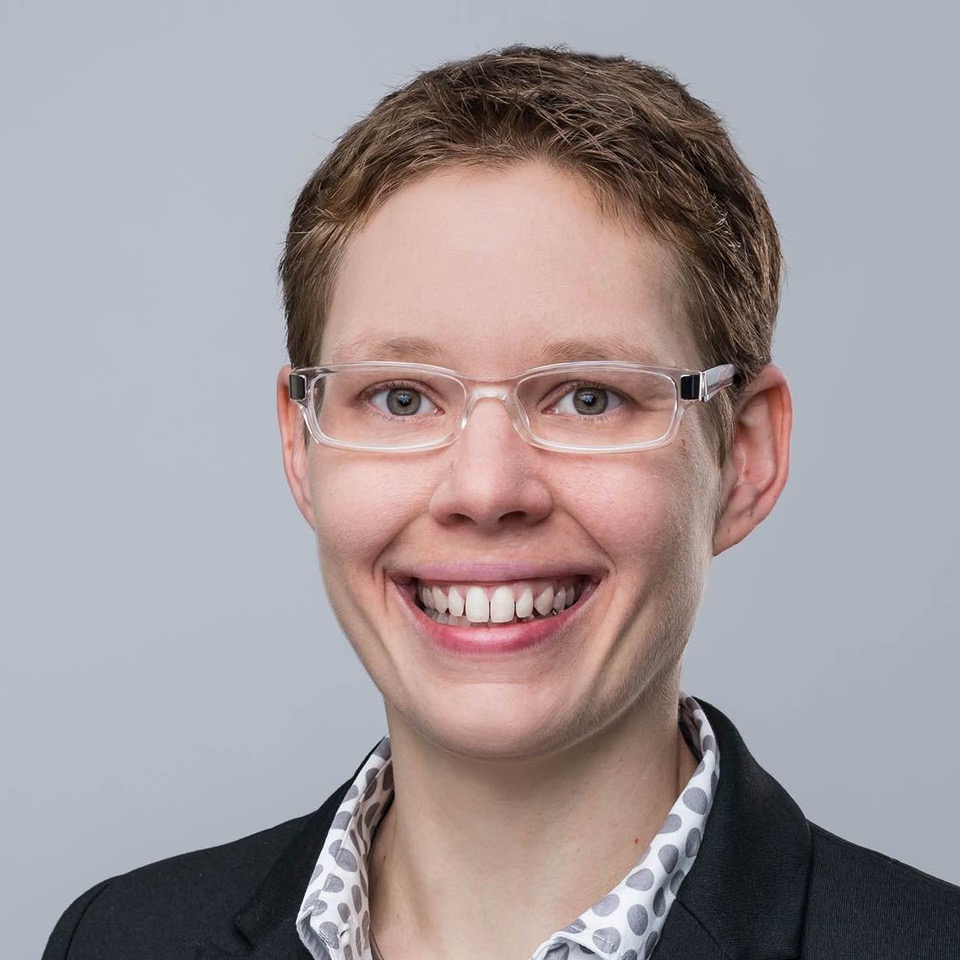
Beyond the Hype: Why Explainable AI Isn't a Silver Bullet
Abstract
Calls for making AI safe, trustworthy and fair are made by scholars, legal institutions, NGOs, and customer protection services alike. However, how to best satisfy these desiderata remains the subject of academic, political, and legal debates. Over the past decade or so, research on explainable AI (XAI) has taken center stage in these debates. While there has been a veritable XAI-hype, and XAI clearly can contribute to desiderata satisfaction in some cases, it must be acknowledged that XAI is not a silver bullet. There are a number of reasons why XAI may fail to successfully lead to desiderata satisfaction, and there are a number of issues XAI cannot successfully address. This talk offers a systematic analysis of XAI shortcomings from an interdisciplinary perspective incorporating contributions from philosophy, law, computer science and psychology. It sketches possible ways forward by proposing strategies that might be needed in addition to XAI research. Eventually, a clever combination of different methods and strategies will hopefully yield satisfaction of important societal desiderata.
Short Bio
Lena Kästner is professor for philosophy, computer science and AI at the University of Bayreuth. She has a background in Cognitive Science and Cognitive Neuroscience and received her PhD in philosophy from Ruhr-University Bochum. Prof. Kästner’s research focuses on explanations, intelligence, and causation. She headed the “Explainable Intelligent Systems (EIS)” and is currently head-PI of the project “For the Greater Good? Deepfakes in Criminal Prosecution (FoGG)”. She is also vice president of the German Society for Philosophy of Science (GWP), vice-director of Bayreuth’s “Research Center for AI in Science and Society (RAIS2), and coordinator of the interdisciplinary Master’s program “Philosophy & Computer Science” in Bayreuth.